


What is a virtual art department? Is it right for your project?
Article
Production Designer, Virtual Art Department
Source
Felix Jorge
Date
2026
I wrote the virtual art department section for the VES Handbook of Virtual Production (Chapter 7). The two questions I get most about it are - what is it, and do I actually need one?
What is the VAD? The art department with an extra branch: a game-engine team that designs sets, builds virtual storyboards, and lets the DP find cameras and pre-light digitally.
A virtual art department (VAD) is a small team of artists from previs, VFX, and game-development. They build scenes digitally, and review inside a game engine, allowing teams to walk through story-beats and locations before anything gets physically built.
Every role matches one you already know:
Art Director → VAD Art Director
Set Designer → VAD Set Designer (or VAD Layout Artist)
Character Designer → VAD Character Artist
Gaffer → VAD Lighter (lights the digital set with guidance from cinematographer)
Set Decorator → VAD Photogrammetry Artist (scans real props and places into 3D)
The two teams work side by side. Traditional art department crew is not replaced, storyboards are hugely beneficial, concept artist, and set designers. The VAD builds the digital versions, and they trade work back and forth with other talent. Lets say the VAD works on a scene, that has multiple cameras placed with the DP. These frames are sent to the crew, to start from. If you're shooting on an LED wall, the VAD also finishes those sets for the shoot.
What you get: pictures and videos your DP and designer can share with the crew, Unreal Engine/3D sets you can walk around in, and a starting point for previs, traditional set design, concept artist, storyboard artist, and VFX.
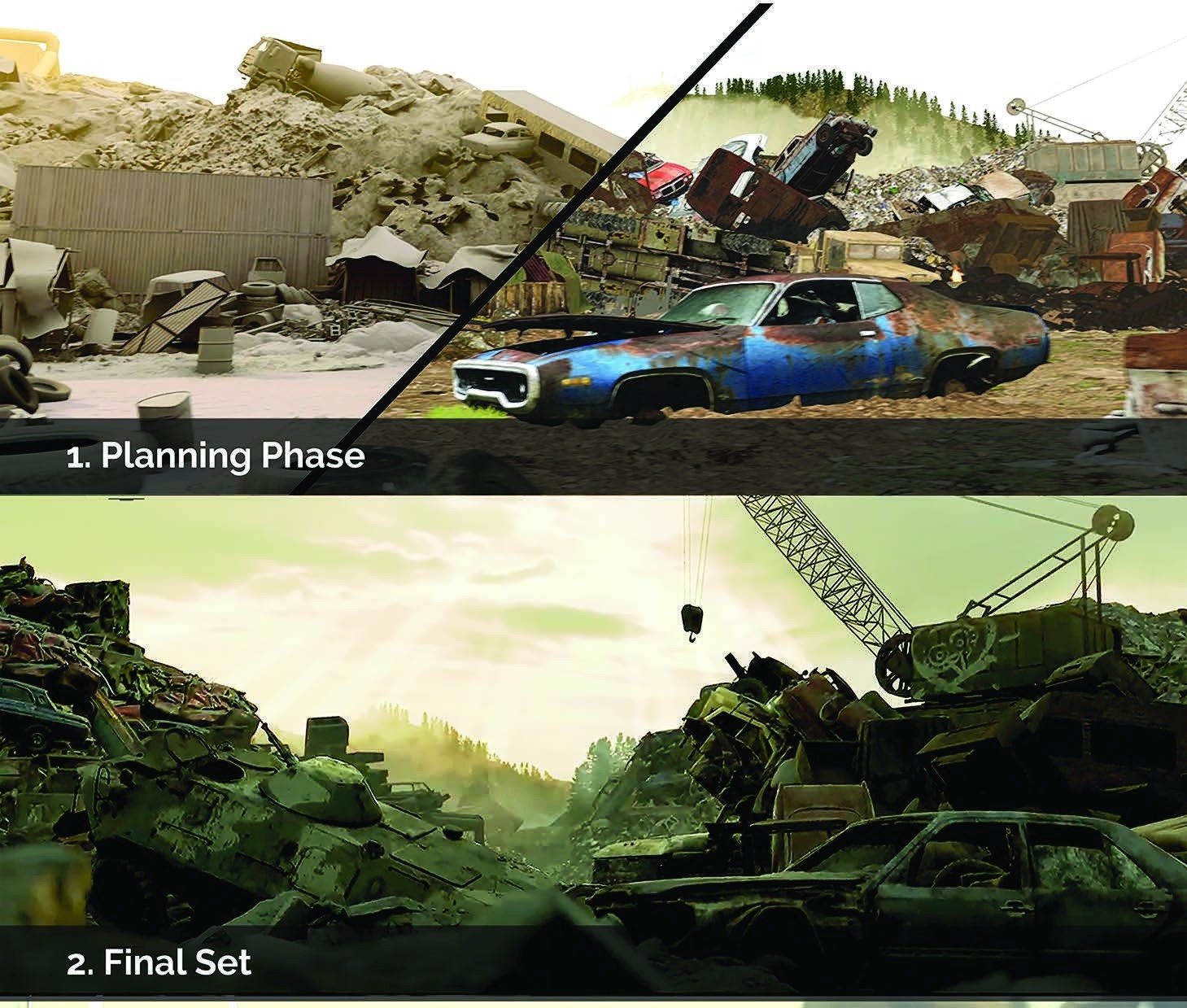
Fathead (2022). From the planning phase to the final set. Courtesy of Entertainment Technology Center.
Is the VAD right for your project? Almost always, maybe not the way you think.
Start with one VAD Art Director and grow from there.
It fits so many shows because you choose how detailed it gets. A simple gray model with basic lighting might be all you need to move through some story-beats, or you can go all the way to a virtual-set that looks real. You decide in prep, so you only pay for what you use.
It works from anywhere. Reviews and virtual location scouts happen over Zoom, sometimes in VR.
How do you know what is needed? I read the script and work through four questions:
What are you trying to achieve?
When do things need to be ready for?
How many scenes, sets, and characters will go through this process?
How available are the key creatives? (There’s higher involvement in pre-pro in this process)
Then pick the right team. Some VADs are best at design: working with the filmmakers early and helping shape the look and budget. Others are best at detailed, finished images.
In my experience, the biggest benefit is making more decisions early. That lets the budget go where it matters, and when it's done well, you see real results. Thanks for reading!
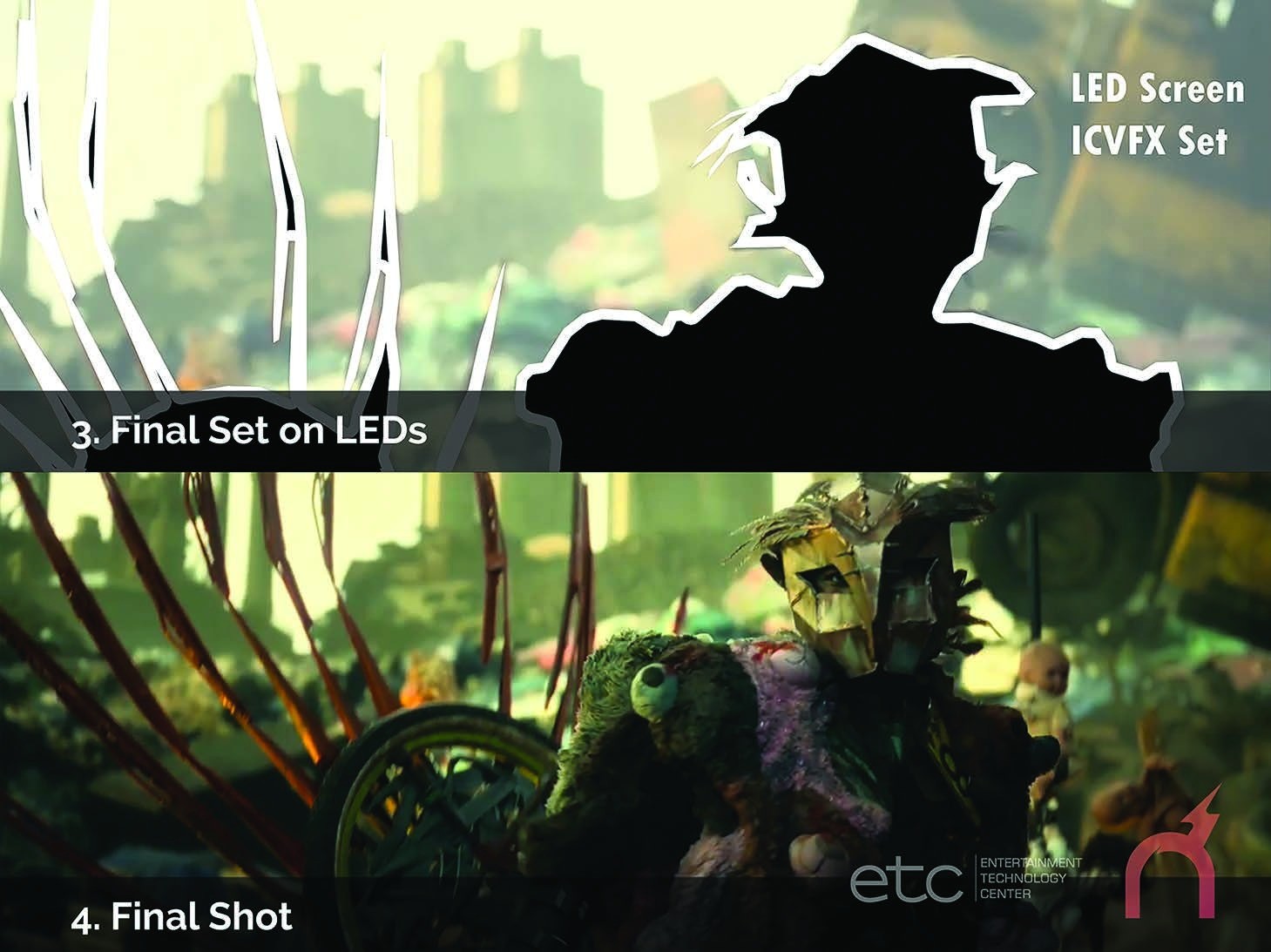
Fathead (2022). The final set on the LED wall, and the final shot.
I'm a life-long learner with a passion for education. I hope what I've learned so far is useful to someone else.
If you have any questions, send them my way! Have a lovely day.


